France Protests Today: Why Are Thousands on the Streets and Over 1,200 Arrested?
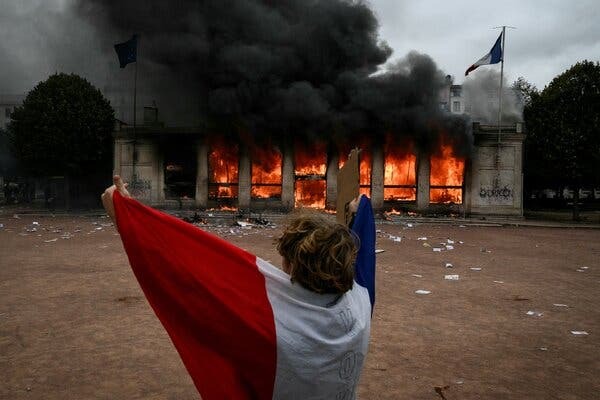
France protests escalated sharply on Saturday, 17 October 2026, as demonstrations over the rising cost of living and strained public services turned violent in several cities. Clashes between masked groups and police led to at least 1,200 arrests nationwide, and in the central city of Limoges, the historic city hall was set on fire. If you have been asking what is happening in France right now, here is a clear, plain-English summary of what is known so far.
President Emmanuel Macron has appealed for calm and warned that violence and attacks on public property will not be tolerated. With government and organiser figures differing widely, the true scale of the unrest has become a major talking point across France and beyond.
What Is Happening in France Right Now?
Large demonstrations took place across the country on Saturday, with crowds gathering in Paris and many other cities. Most of the day was marked by organised marches, but as evening fell the mood changed in several places. Groups of masked or hooded individuals clashed with police, and reports described looting, damage to shops and attacks on public buildings.
In Paris, police used tear gas and baton charges in narrow streets after groups of young people lit fires and looted as the official protests ended. Violent incidents were also reported in Marseille, Rennes, Toulouse and Angers. French Prime Minister Sébastien Lecornu condemned what he called unacceptable levels of violence and said more than 150 police officers had been injured.
Limoges City Hall Fire: What We Know
The most striking image of the day came from Limoges, in central France. According to reports from AFP and local officials, masked individuals broke windows, entered the historic Limoges city hall and started a fire. Video from the scene showed the roof collapsing, and the building’s tower was reported to have fallen as flames spread. The structure, described as roughly 143 years old and listed as a protected landmark, was said to be largely lost.
Officials have called the damage a heavy blow to local heritage. It is important to note that the authorities’ statements did not identify who started the fire, and the investigation is still at an early stage. Details may change as fire crews and investigators complete their assessment.
Why Is France Protesting?
The short answer is the cost of living, but the full picture is wider. Reports say the movement began last month at high schools in Paris’ working-class northern suburbs, where anger over teacher shortages and poorly maintained facilities spread into a broader campaign about inequality, public spending and everyday living standards.
When food, housing and energy bills keep climbing, many households feel squeezed, and that frustration often turns into dissatisfaction with government policy and the country’s direction. Younger people have been especially visible in the demonstrations. However, protesters do not all share the same demands, and the full range of grievances should be confirmed through further reporting.
It also helps to remember that France has a long tradition of street protest. Budget cuts, pension reform and political instability have all sent crowds into the streets in recent years, and France has now seen a rapid turnover of prime ministers. Lecornu is the latest in that line, which adds to the sense of political uncertainty.
Are There Riots in Paris Today?
Reports describe violent incidents in Paris, including fires, looting and clashes with riot police, which is why searches for Paris riots today and French riots have jumped. At the same time, it is worth separating isolated violence from the overall protest. Hundreds of thousands of people took part in the demonstrations, and the large majority of them marched without being involved in any disorder.
Conditions can change quickly during large protests. If you live in or are travelling to France, check current reports from reliable news organisations and official French authorities for confirmed information on affected areas, police activity and public transport disruption.
What Did Emmanuel Macron Say?
Macron urged the public to stay calm and said those responsible for violence and damage would face legal consequences. His remarks followed reports of attacks on public buildings, damage to businesses and looting. Prime Minister Lecornu also visited affected sites and described the scale of the violence as unacceptable.
The government now faces a difficult balancing act. It must protect public safety and punish serious crimes, while also showing that it is listening to the economic concerns that brought so many people onto the streets in the first place.
How Many People Joined the France Protests?
The numbers differ depending on who is counting, which is common with large demonstrations in France:
- Government estimate: about 550,000 participants nationwide.
- Organisers’ estimate: about 800,000 participants nationwide.
- Arrests: at least 1,200 people, according to the Prime Minister.
- Police injured: more than 150 officers, according to the Prime Minister.
These figures come from the reports cited and have not been independently verified here. Arrest totals also do not show how many people protested peacefully and how many were involved in violence.
What Happens Next?
Much depends on whether the demonstrations continue, whether more clashes follow and how the government responds. Macron’s firm stance against violence suggests tougher policing in the short term, while the size of the turnout shows that the economic grievances behind the unrest will not disappear quickly.
The key questions now are simple. Will the protests grow or fade? Will further arrests follow? And what steps will French leaders take to address the cost of living, school funding and public services that first sparked the movement? We will update this page as reliable information becomes available.
France Protests: Frequently Asked Questions
Why is France protesting?
People are protesting mainly about the rising cost of living, inequality, public spending and the state of public services such as schools. The movement reportedly started with high school protests in Paris suburbs and then broadened.
What is going on in France right now?
Nationwide protests on 17 October 2026 saw large peaceful marches, followed by clashes, looting and fires in several cities. At least 1,200 people were arrested and Limoges city hall was badly damaged by fire.
Are there riots in Paris and France?
Yes, violent incidents were reported in Paris, Marseille, Rennes, Toulouse, Angers and Limoges. Most protesters, however, were not involved in the violence.
What did Macron say about the protests?
Macron called for calm and warned that violence and damage to public property would not be tolerated and that those responsible would face the law.
What happened to Limoges city hall?
Masked individuals reportedly broke in and set fires. The roof and tower collapsed, and the historic building was described as largely lost. The cause and those responsible are still under investigation.
This article is a summary based on reports from CNN, AFP (via IBTimes), GB News and Business Today, published 17–18 October 2026. Arrest figures, crowd estimates and developing events may change, so please check current, reliable sources for the latest information.